Can You Be Angry at God and Still Have Faith?
Can You Be Angry at God and Still Have Faith?
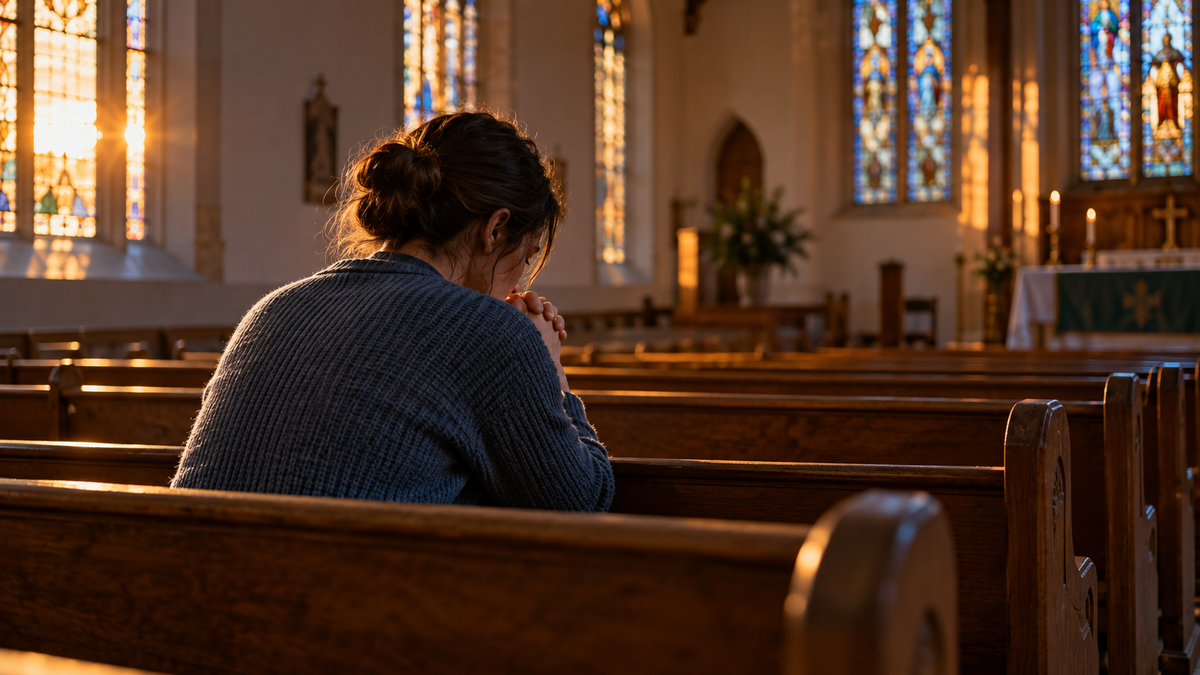
The Bible does not hide the voices of people who felt abandoned, confused or furious with God. Their honesty may reveal something important about what faith actually is.
By Daniel Whitaker | Between Faith & Doubt
Some people stop praying when they become angry with God.
They assume anger is disrespectful, doubt is dangerous and disappointment should be cleaned up before it enters a prayer. So they offer God a careful version of what they feel while carrying the honest version alone.
The Bible is far less careful.
Its pages are filled with people who ask why God seems absent, why injustice continues and why faithful people suffer. They complain. They grieve. They demand answers. At times, they speak to God with a directness that would make many church conversations uncomfortable.
Their words remain in Scripture anyway.
That should tell us something: Anger at God is not necessarily the opposite of faith. Sometimes it is what faith sounds like when life has stopped making sense.
Scripture Does Not Edit Out the Argument
The Psalms are often remembered for praise, but many of them begin in protest.
Psalm 13 asks how long God will seem to forget the writer. Psalm 22 opens with the cry that Jesus would later speak from the cross: “My God, my God, why have you forsaken me?” Psalm 73 wrestles with the apparent success of cruel people while those trying to live faithfully suffer.
Job does not quietly accept his losses. He questions the justice of what has happened to him and wishes he had never been born.
Habakkuk asks why God makes him look at wrongdoing while justice is distorted.
These are not outsiders mocking belief. They are people speaking from inside a relationship with God.
They are angry because they believe God is good—and because their experience appears to contradict that goodness.
The argument exists because the relationship matters.
Anger Can Hide Grief Underneath It
Anger is often the emotion standing guard over something more vulnerable.
We may be angry because someone we love died despite months of prayer. Because an illness returned. Because a marriage ended. Because a child is hurting. Because the person who caused harm appears to be doing fine while the wounded person carries the consequences.
Saying “I am angry with God” may also mean “I am heartbroken,” “I feel abandoned” or “I trusted that this would turn out differently.”
Pretending not to feel that anger does not protect God. It only makes honest prayer more difficult.
If God already knows the heart, polished language is not a form of reverence. It can become a form of hiding.
Biblical lament offers another way.
Lament tells the truth about pain while continuing to address God. It does not call suffering good. It does not rush toward a lesson. It brings the complaint into the relationship rather than allowing the complaint to end it.
Honesty Is Not the Same as Certainty
Faith is sometimes presented as complete confidence: no questions, no hesitation and no anger.
But the faith shown in Scripture is often more durable than that.
It is not always certainty about what God is doing. Sometimes it is the stubborn decision to keep speaking to God when you do not understand Him