How to Read the Bible When You Don’t Know Where to Start
Want to read the Bible but have no idea where to begin? Daniel Whitaker offers a simple, pressure-free approach for starting—and sticking with it.
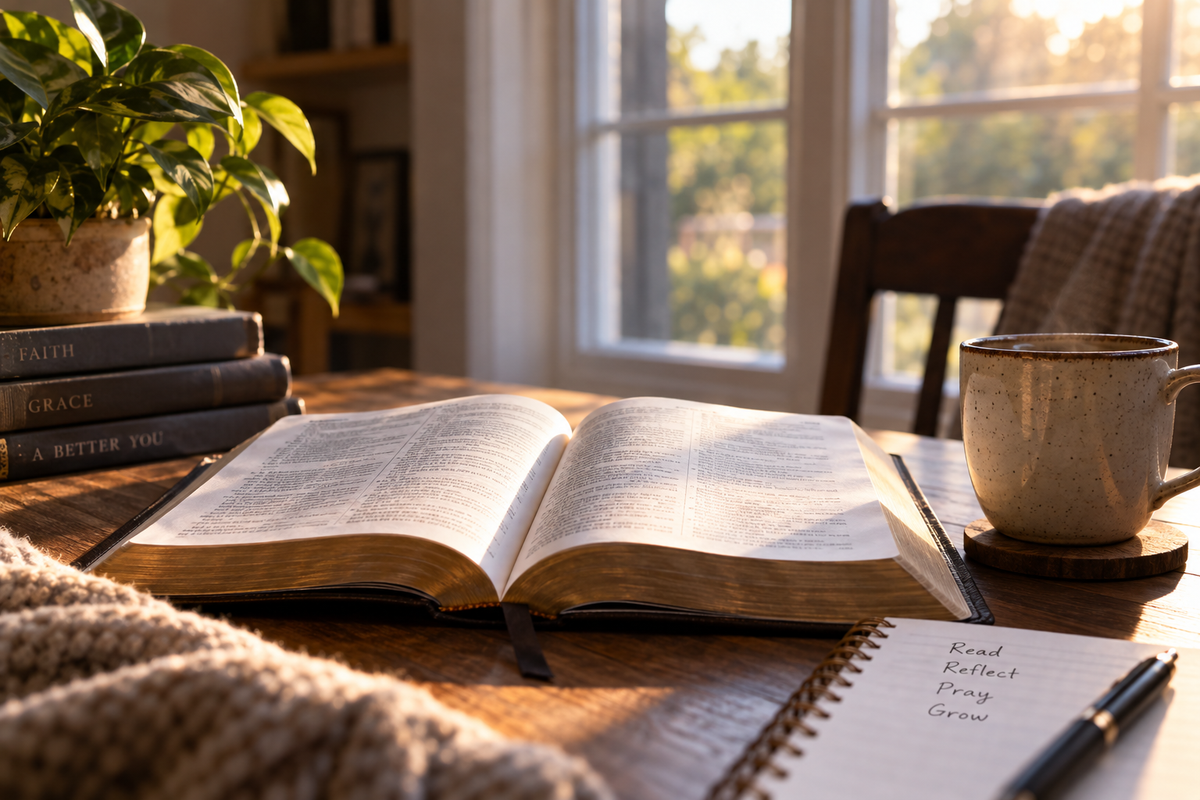
You don’t have to understand everything, or even start at the beginning, to begin.
By Daniel Whitaker | Between Faith & Doubt
There’s a particular kind of guilt that can come with an unopened Bible.
Maybe it’s been sitting on your nightstand for months. Maybe you downloaded an app with good intentions. Maybe you’ve tried reading before, made it through a few chapters, got confused or bored, and quietly stopped.
Then you think, I really should read the Bible more.
So you open it.
And immediately face the first problem:
Where do I even start?
The Bible is one book, but it doesn’t read like one. It’s a collection of 66 books written across many centuries by different authors and in different kinds of writing—history, poetry, letters, prophecy, wisdom, and more.
That means starting on page one and reading straight through isn’t necessarily the best approach.
If you’ve tried that and struggled, you didn’t fail.
You may have simply started with the wrong strategy.
Don’t Worry About Reading It in Order
When someone decides to read a novel, starting with chapter one makes sense.
The Bible is different.
Genesis is actually a fascinating place to begin. It contains creation, Noah, Abraham, Joseph, and some of the foundational stories of the Christian faith.
But eventually, a cover-to-cover reader reaches long sections of ancient laws, genealogies, and detailed instructions that can be difficult to understand without some background.
That’s where many well-intentioned Bible-reading plans quietly end.
There’s nothing wrong with reading the Bible from Genesis to Revelation. But if you’re new to it, you don’t have to.
Instead, I’d start with Jesus.
Start With the Gospel of John
The New Testament begins with four accounts of the life of Jesus: Matthew, Mark, Luke, and John.
They’re called the Gospels.
Any of the four can be a good starting point, but I often recommend John.
John introduces you directly to who Jesus is, what He taught, how He interacted with people, why He came, and what His death and resurrection mean.
And don’t make the mistake of turning this into an assignment.
You don’t need to read five chapters every morning.
Try one chapter.
If that’s too much, read half a chapter.
If one paragraph gives you something worth thinking about all day, there’s nothing wrong with stopping there.
The goal isn’t to finish.
The goal is to listen.
Ask Three Simple Questions
You don’t need a theology degree, a shelf full of commentaries, or six different colored highlighters.
As you read, ask:
What does this tell me about God?
What does this tell me about people—including me?
Is there anything here I should do, change, or think about differently?
Sometimes you’ll have an answer to all three.
Sometimes you won’t have an answer to any of them.
That’s okay.
Bible reading isn’t a test you’re going to be graded on.
It’s Okay Not to Understand Something
You will encounter passages that confuse you.
I’ve encountered them too.
Christians have been studying some of these passages for centuries and still disagree about exactly how they should be interpreted.
So when you reach something you don’t understand, resist the urge to conclude that you’re simply “bad at reading the Bible.”
Make a note. Look it up later. Ask someone you trust. Or keep reading.
Understanding Scripture grows over time.
A passage that seems completely mysterious today may make considerably more sense a year from now because you’ve learned what surrounds it.
Talk to God Before You Read
This doesn’t need to be elaborate.
Before opening the Bible, you might simply pray:
God, help me understand what You want me to see today.
That’s enough.
You’re reminding yourself that Christian Bible reading isn’t merely about accumulating information.
It’s about relationship.
Where Do You Go After John?
Once you’ve finished John, I’d suggest Acts.
Acts tells what happened after Jesus’ resurrection and shows the beginnings of the Christian church.
After that, you can begin exploring in different directions.
Read Psalms when you want words for prayer, fear, gratitude, grief, and praise.
Read Proverbs for practical wisdom about everyday life.
Read James for remarkably direct teaching about what lived-out faith looks like.
Then go back and read Genesis. You’ll begin recognizing connections you probably wouldn’t have noticed the first time.
Eventually, the intimidating collection of books starts becoming connected.
You begin seeing the larger story.
Fifteen Minutes Is Enough
One of the easiest ways to stop reading the Bible is to create a routine you can’t maintain.
Don’t decide that beginning tomorrow you’re going to wake up an hour early and read ten chapters every day for the rest of your life.
Start with fifteen minutes.
Maybe ten.
Read slowly.
Think.
Ask questions.
Pray.
And then come back tomorrow.
A small habit practiced consistently will take you much further than an ambitious plan abandoned after a week.
Just Open It
Maybe your Bible has been sitting untouched for a long time.
That’s okay.
You don’t have to catch up.
You don’t have to prove anything.
And you certainly don’t need to understand the entire Bible before you’re allowed to benefit from part of it.
Open John.
Read the first chapter.
See what catches your attention.
Then come back the next day.
Because perhaps the best way to begin reading the Bible isn’t with a complicated reading plan at all.
It’s simply to begin.