10 Things You Should Never Store in Your Garage
The garage may seem like the perfect storage space, but heat, humidity and pests can quietly ruin many common belongings. Here are 10 things you should move somewhere safer.
By Claire Bennett | The Everyday
The garage may feel like the perfect place for anything that does not fit inside the house. But heat, humidity, pests and changing temperatures can quietly ruin—or make unsafe—many everyday belongings.
Garages have a way of becoming the place where decisions go to wait.
The extra paint goes on a shelf. Old photographs land in a plastic tote. A bag of dog food gets tucked beside the lawn mower. Before long, the garage is holding half a household’s history—and several things that were never meant to live there.
The problem is not simply clutter. Most garages are not climate-controlled. Temperatures can climb dramatically in summer, fall sharply in winter and change throughout the day. Humidity, insects, rodents, dust and fumes add their own risks.
If you are organizing your garage, start by moving these 10 things somewhere safer.
1. Important papers and family photographs
Birth certificates, tax records, insurance documents and printed photographs can all be damaged by moisture and temperature changes. Paper absorbs humidity, encouraging mildew, yellowing and warping. Photographs may stick together or fade, while important documents can become brittle and unreadable.
Store irreplaceable papers and photographs indoors in archival-quality boxes or folders. Choose a dry location away from direct sunlight, plumbing and exterior walls. Digital backups provide an additional layer of protection, but they should not be the only reason to neglect the originals.
2. Paint
Keeping leftover paint for touch-ups is sensible. Keeping it in a hot or freezing garage is not.
Extreme temperatures can change the paint’s texture and make it separate, thicken or become unusable. A tightly sealed can may look fine from the outside even when the contents have been damaged.
Check the manufacturer’s storage instructions and keep paint in a stable location when appropriate. Label each can with the room, color and date. If the paint is no longer usable, follow your community’s rules for household hazardous-waste disposal rather than placing liquid paint in ordinary trash.
3. Propane tanks and highly flammable materials
Propane cylinders should never be stored inside your home, but an attached garage is not an ideal compromise. A leak can allow gas to collect in an enclosed space, where a spark, appliance or vehicle could ignite it.
Store propane cylinders upright in a well-ventilated outdoor location, away from heat, flames and ignition sources. Gasoline and other flammable liquids also require approved containers and careful storage. Follow the product label and local fire-safety guidance.
4. Canned food and pantry staples
The garage may seem like bonus pantry space, especially after a warehouse-store trip. Unfortunately, changing temperatures can shorten the shelf life of canned goods and affect food quality. Boxes and bags of rice, flour, cereal and pasta can also attract insects or rodents.
Food lasts best in a cool, dry indoor pantry. If you need more room, consider a narrow shelving unit inside a laundry room, kitchen or interior closet. Buy only what your household can store safely and use before its quality declines.
5. Pet food and birdseed
An open or loosely closed bag of pet food is an invitation to pests. Even unopened bags can be chewed through, and heat may cause fats in the food to deteriorate more quickly.
Keep pet food indoors when possible. If garage storage is unavoidable, use a sturdy, airtight container made for food storage and place it off the floor. Do the same with birdseed, grass seed and similar products that attract rodents.
6. Medications and medical supplies
Prescription medicines, over-the-counter products, vitamins, glucose-testing supplies and many first-aid items need stable conditions. Heat and moisture may reduce their effectiveness or damage their packaging.
Store medications according to their labels, usually in a cool, dry place inside the home and out of reach of children and pets. A bathroom medicine cabinet is not always ideal either because showers create humidity. Ask a pharmacist if you are unsure about a particular medication or medical supply.
7. Electronics and batteries
Old televisions, computers, speakers and gaming systems often end up in the garage because nobody is ready to throw them away. Moisture can corrode internal parts, while heat and cold can damage screens, batteries and other components.
Move electronics you intend to keep into a climate-controlled area. Remove batteries from devices stored for long periods, and recycle unwanted electronics and rechargeable batteries through an appropriate local program.
Do not keep damaged or swollen lithium-ion batteries. Follow local safety guidance for handling and disposal.
8. Clothing, bedding and upholstered items
Cardboard boxes filled with winter clothes, blankets or children’s keepsakes may become nesting material for pests. Fabric also absorbs odors and moisture, which can lead to mildew that is difficult to remove.
Wash and completely dry fabrics before storing them indoors in sealed containers. Avoid long-term garage storage for mattresses, upholstered furniture and sentimental textiles. If an item matters enough to preserve, it deserves a cleaner and more stable environment.
9. Wooden furniture and musical instruments
Wood expands and contracts as temperature and humidity change. Over time, furniture can warp, crack or develop loose joints. Musical instruments are even more sensitive; wood, glue, strings, pads and finishes may all be affected.
Keep valuable furniture and instruments indoors. If you must temporarily place wooden furniture in the garage, elevate it from the concrete floor, cover it with breathable material and move it inside as soon as possible. Plastic wrapping can trap moisture rather than protect against it.
10. Valuables and sentimental belongings
Jewelry, collectibles, antiques, artwork and family keepsakes do not belong in a space that is easy to enter and difficult to climate-control. Beyond environmental damage, garages may offer less protection from theft than the main living area.
Decide whether each item should be displayed, stored securely indoors, insured, donated or passed along to someone who will use it.
“Valuable” does not always mean expensive. A box of handwritten letters may deserve more protection than something with a high resale price.
A better way to organize the garage
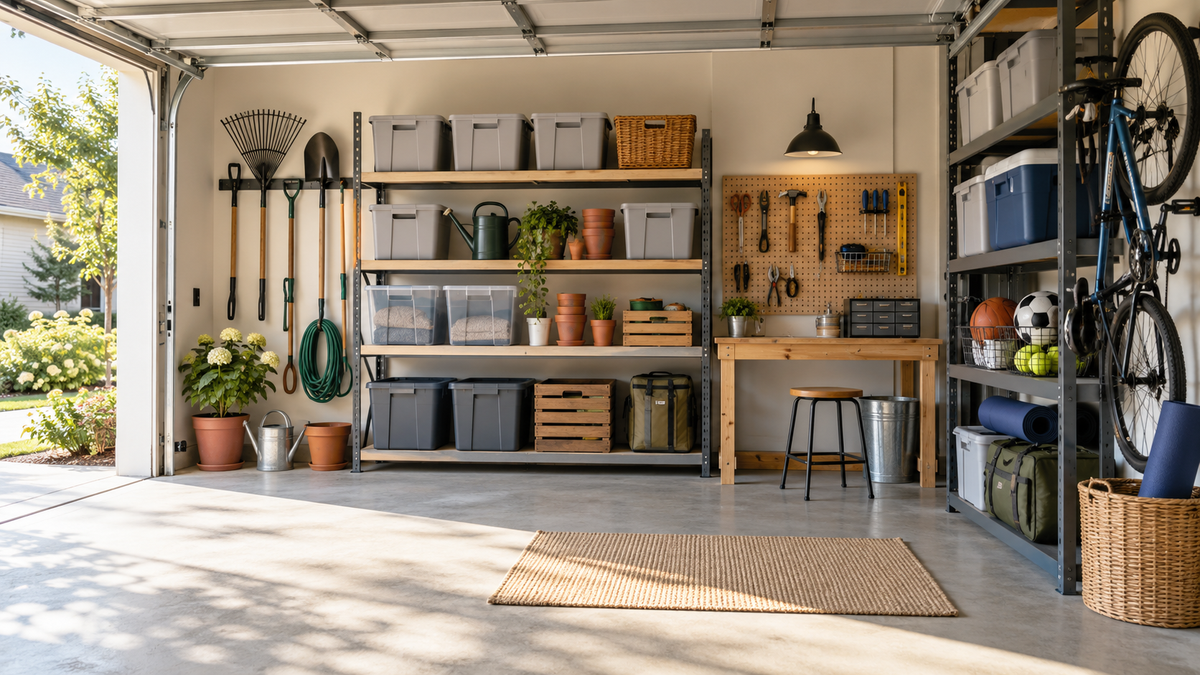
Once the vulnerable items are removed, organize what truly belongs in the garage by activity rather than by whatever happens to fit on a shelf.
Create separate zones for gardening, automotive supplies, sports equipment, tools and seasonal outdoor items. Use wall-mounted storage to free floor space, place frequently used belongings within easy reach and keep chemicals clearly labeled and away from children and pets.
Most importantly, leave room to move. A garage should not require an obstacle course every time you need a screwdriver or want to open the car door.
You do not have to organize everything in one exhausting weekend. Start with one shelf, one category or one decision:
Does this item belong in the garage at all?
That single question can make the rest of the job much easier.