Christian Rock Was Supposed to Fade Away. Skillet Just Proved Otherwise.
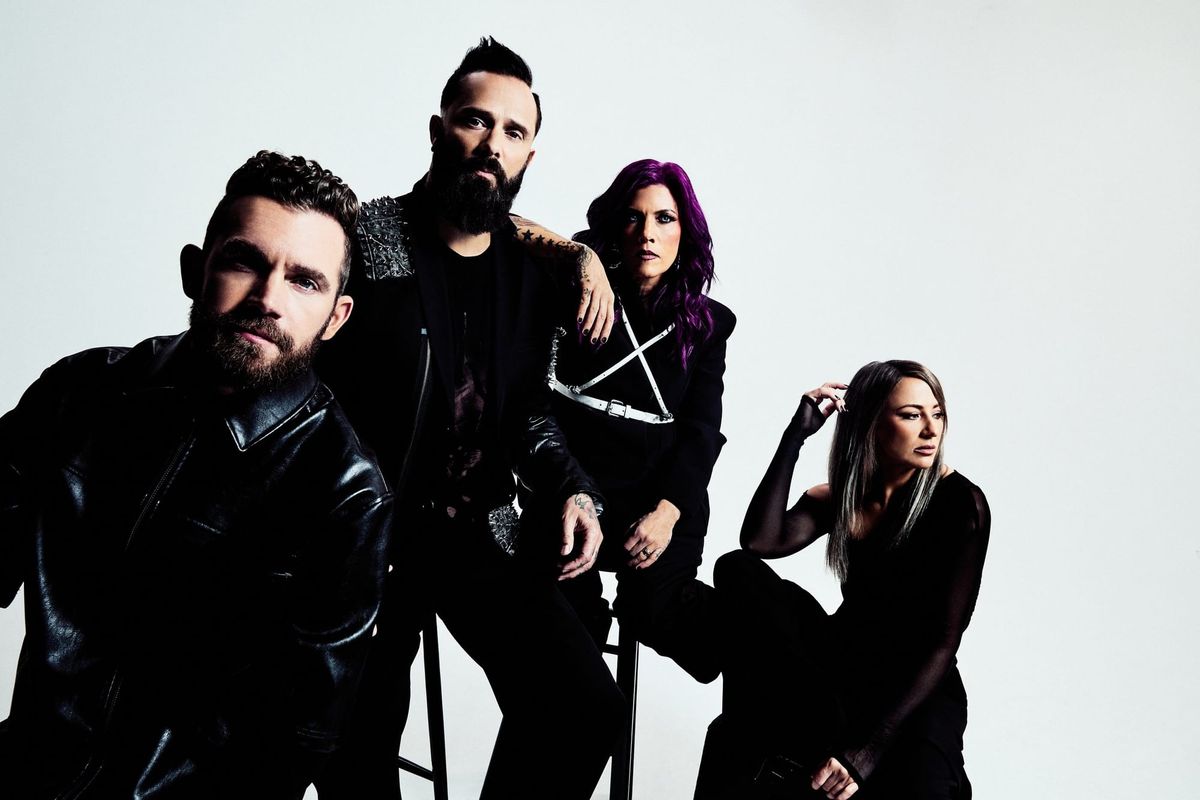
Nearly 30 years into a career that should have remained confined to Christian music, Skillet has reached 30 million certified units, and a new generation is still discovering the band.
Editor’s note: TAJ founder David Showers first covered Skillet earlier in his career. Nearly three decades later, the band’s latest milestone offered an opportunity to revisit a story that never stopped evolving.
Christian rock has spent decades being treated like a musical side room—large enough to attract a loyal audience, but supposedly too narrow to matter outside it.
Skillet apparently never received that memo.
The band has now accumulated 30 million RIAA-certified units across 21 titles, led by “Monster,” which has reached seven-times Platinum status. “Hero” is four-times Platinum, while “Awake and Alive” and “Feel Invincible” have each reached three-times Platinum.
Those would be remarkable numbers for almost any rock band. For one that emerged from the Christian music world nearly 30 years ago, they challenge some stubborn assumptions about which artists get to cross over—and how long they are allowed to remain relevant.
The song that refused to disappear
Released in 2009, “Monster” did not behave like a typical hit with a predictable expiration date.
It kept moving.
The song crossed from Christian radio into sports arenas, workout playlists, gaming culture and mainstream rock. It has now generated more than five billion global streams and became the first song by a Christian artist to surpass one billion streams on Spotify.
That is not simply longevity. It is reinvention through audience discovery.
Many younger listeners encountering “Monster” today were children—or had not yet been born—when it was released. They may not know which radio format originally embraced Skillet. They know the opening riff, the tension in John Cooper’s voice and a chorus built to be shouted by thousands of people at once.
Watch “Monster” — Official Video
The traditional boundaries between Christian and mainstream music matter far less to listeners raised on streaming services. A song now reaches people through recommendation algorithms, video games, sporting events, social clips and playlists that ignore the old record-store categories.
Skillet was unusually well positioned for that change. The band’s music has always been accessible without requiring listeners to share every part of its worldview.
Faith without the safety rails
Skillet’s success does not mean the band abandoned its identity to achieve mainstream acceptance.
The more interesting explanation is that it refused to soften the difficult parts of that identity.
Skillet’s songs frequently deal with fear, spiritual struggle, anger, isolation and the decision to keep moving when hope feels unreasonable. Faith is present, but it is rarely presented as an easy escape from pain.
That distinction matters.
Audiences can recognize when music offers honest struggle and when it merely offers slogans. Skillet has survived because its songs sound less like polished religious instruction and more like someone fighting their way through the dark.
The band’s forthcoming six-song EP, After the Storm, continues that pattern. Scheduled for release October 9, the independent project was produced by David Cowell and Korey Cooper and returns Skillet to a heavier, rawer sound.
Its songs grew from a period involving betrayal, anger, depression, perseverance and faith. John Cooper has described the project in unusually personal terms: “I wrote these songs because I needed to be lifted out of my own darkness.”
That sentence explains more about Skillet’s durability than the certification plaques do.
A new chapter—not a victory lap
It would be easy for a band approaching its 30th anniversary to survive as a touring nostalgia act. Skillet is doing something different.
The band currently averages more than 12 million monthly Spotify listeners. Its 2026 European tour reached approximately 90,000 fans across 23 cities, including sold-out shows and record-setting ticket sales at Paris’ Zénith.
Meanwhile, new songs are finding an audience of their own.
The single “Scream” introduced the emotional territory of After the Storm, confronting the anxiety, anger and search for meaning beneath modern culture’s constant noise. “Lift Me Up” follows with crushing guitars and a direct plea for help when determination alone is not enough.
“Lift Me Up” resembles early Skillet without sounding trapped in the band’s past. Its message is familiar—survival, struggle and hope—but the weight behind it feels personal rather than manufactured.
Watch “Lift Me Up” — Official Visualizer
That may be the real reason Skillet continues reaching new listeners. The production changes. The industry changes. The audience changes. But the emotional need underneath the music does not.
People still feel angry. They still feel overwhelmed. They still wonder whether faith can survive disappointment. They still need music that acknowledges the darkness without surrendering to it.
What Skillet’s success actually proves
Skillet’s story is not merely that a Christian band became successful.
It is that categories become less powerful when the work itself connects.
The band did not wait for the broader culture to validate Christian rock. It built a catalog strong enough to escape the boundaries placed around it. “Monster” became too large to remain somebody else’s niche. Millions of listeners made that decision one stream, one game, one workout and one concert at a time.
Nearly three decades into its career, Skillet is not being rediscovered as a novelty from another era. The band is being discovered for the first time by people who do not care where the industry once filed its albums.
Christian rock was supposed to remain inside its lane.
Skillet kept driving until the lane disappeared.
Sources: The Media Collective’s September 16, 2026 certification announcement and August 14, 2026 After the Storm announcement.