Dolly Parton Was More Than a Country Star. She Was Something We Rarely Get Anymore.
The music will survive. So will the rhinestones. But Dolly Parton's greatest achievement may have been becoming someone almost everyone could love.
By Jack Sullivan
Entertainment Writer · The Algorithmic Journal
After Credits
Dolly Parton died Tuesday at 80, and there is something strange about typing those words.
Not because death at 80 is unimaginable. Not because we didn't know Dolly was getting older. And not because the world hasn't lost legends before.
It's strange because Dolly Parton somehow seemed permanent.
The hair. The rhinestones. The Tennessee accent. The laugh. The self-deprecating jokes. And, underneath all of it, a songwriter capable of putting heartbreak into words so simple that millions of people could recognize themselves in them.
Her representative said Parton died after a brief battle with cancer at Vanderbilt-Ingram Cancer Center in Nashville, surrounded by loved ones.
But reducing Dolly Parton's life to the circumstances of her death feels particularly inadequate.
Because Dolly was never merely famous.
She became part of the furniture of American culture.
The Joke Was Never on Dolly
People sometimes mistook the packaging for the product.
Dolly encouraged that.
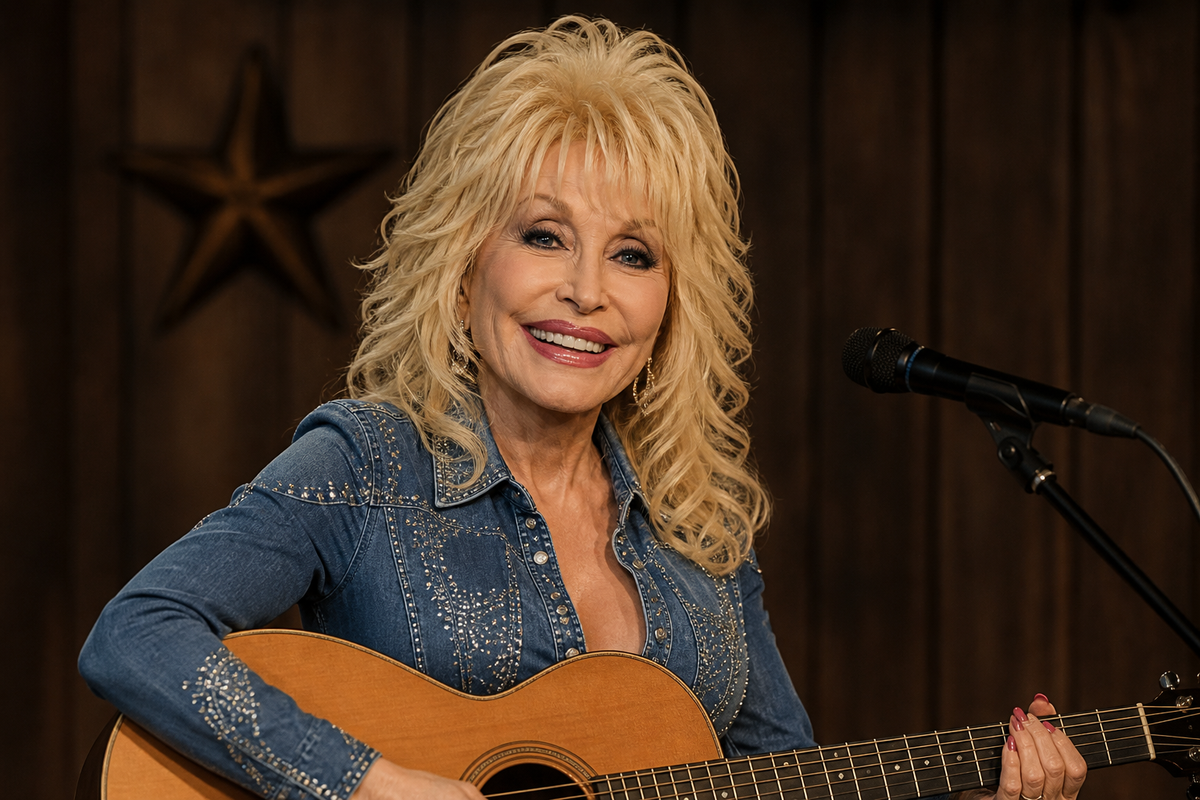
She built an exaggerated version of herself—towering blond hair, impossible proportions, sparkling clothes and enough rhinestones to interfere with satellite communications—and then cheerfully made the joke before anybody else could.
That was part of her genius.
Behind the carefully constructed image was an extraordinarily gifted songwriter and remarkably shrewd businesswoman.
She wrote songs that became standards. "Jolene." "Coat of Many Colors." "9 to 5." "I Will Always Love You."
That last song alone would have secured somebody else's musical legacy.
For Dolly, it was one entry in an enormous catalog.
She moved between country music, pop culture, movies and business without ever appearing embarrassed by where she came from or particularly desperate to be accepted by wherever she was going.
She simply remained Dolly.
Everybody's Dolly
The remarkable thing wasn't merely that Dolly Parton remained famous for decades.
Plenty of people do that.
The remarkable thing was how many different kinds of people seemed to claim her as their own.
Country fans loved her.
Pop audiences loved her.
Rock musicians respected her.
Hollywood embraced her.
Generations who weren't alive when "Jolene" was released knew exactly who she was.
And people who agreed on almost nothing else could somehow agree on Dolly Parton.
That may be one reason the reaction to her death has been so immediate and widespread. Tributes have poured in from across entertainment and public life.
Celebrity usually becomes more divisive as it grows.
Dolly somehow moved in the opposite direction.
The bigger she became, the more accessible she seemed.
She Put the Fame to Work
There is another part of Dolly's legacy that matters just as much as the records.
She used celebrity as a tool.
Her Imagination Library grew from a literacy program serving children in her home county in Tennessee into an enormous international effort providing free books to children. She contributed to disaster relief, medical care and research, including a $1 million donation to Vanderbilt University Medical Center that supported COVID-19 vaccine research.
And she had a gift for generosity without turning generosity into self-congratulation.
That distinction matters.
Dolly Parton understood something celebrities often forget: being adored by millions of strangers is an extraordinary privilege.
She spent much of her life trying to return the favor.
The Last Curtain
Her husband of nearly six decades, Carl Dean, died in March 2025. In the period that followed, Parton dealt with health problems while continuing to plan new projects. Only days before her death, she was still talking publicly about things she hoped to accomplish.
That feels appropriate.
Dolly never really behaved like someone waiting for a retrospective.
She kept working.
There will now be plenty of retrospectives anyway.
There should be.
People will rank the songs and replay the movies. They'll tell the stories about Dollywood and the songwriting and the business deals. They'll show photographs of the hair getting progressively larger as the decades pass.
And somewhere tonight, somebody who wasn't born when Dolly recorded her greatest songs will discover one of them for the first time.
That's the wonderful thing about music.
The singer eventually leaves.
The voice doesn't.
Dolly Parton spent 80 years building something much larger than a career. She created a place for herself in people's lives—a place built from songs, humor, generosity, faith, ambition and an absolutely unapologetic amount of glitter.
There will be other country stars.
There will be other great songwriters.
There will certainly be other celebrities.
But there will never be another Dolly.
And somehow, I think she knew that all along.