The Trump-Xi Summit Is About More Than Tariffs
The Trump-Xi summit is about more than tariffs. Hidden beneath the headlines is a struggle over the minerals, manufacturing, and technology that could shape the global economy for decades.
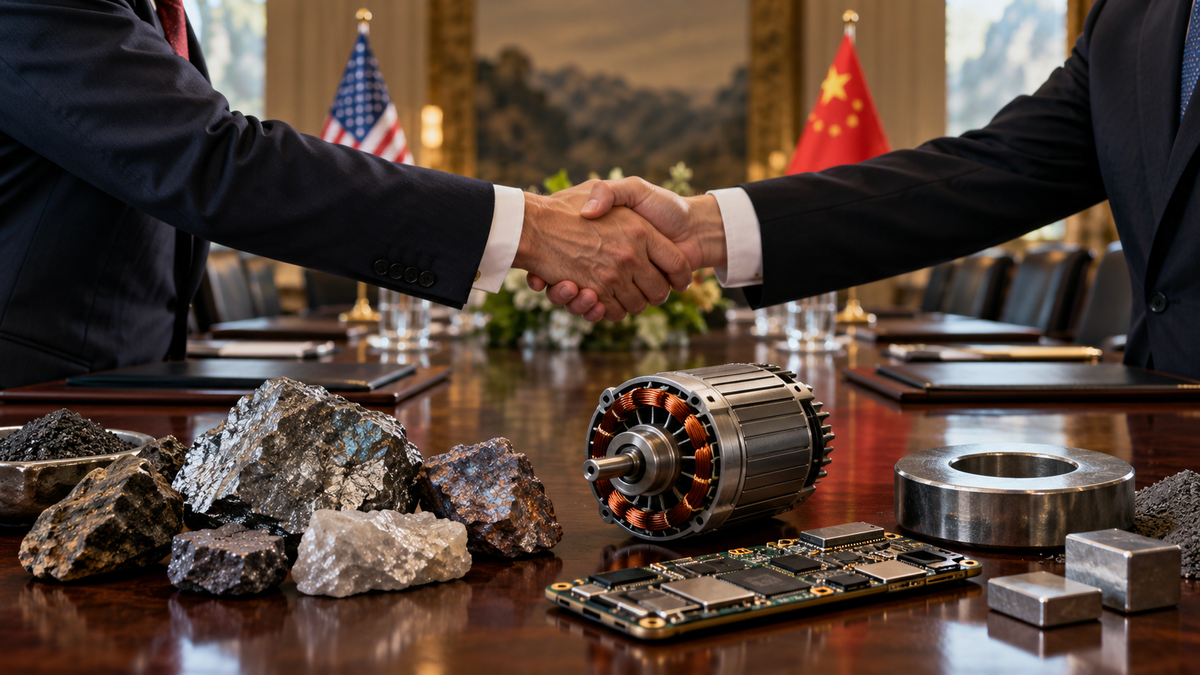
The meeting between the American and Chinese presidents could influence everything from farm exports to artificial intelligence. One of the most important issues involves materials most Americans rarely think about.
By Tom Mercer | The Brief
President Donald Trump and Chinese President Xi Jinping are meeting in Washington during an official state visit that arrives at a delicate moment for the world’s two largest economies.
Tariffs will receive much of the attention. So will Taiwan, American agricultural exports, artificial intelligence, and the continuing trade imbalance between the two countries.
Beneath those larger disputes, however, is a fight over something far less familiar: the minerals and manufacturing processes that modern technology cannot easily function without.
Rare Earths Are Hidden in Everyday Life
Rare earths are a group of metallic elements used to produce powerful magnets and specialized electronic components.
Despite their name, many are not unusually rare. The difficulty is finding deposits that can be mined economically, separating the elements from one another, and refining them into materials manufacturers can actually use.
Those materials can be found in smartphones, electric motors, medical equipment, wind turbines, military aircraft, guidance systems, and countless other technologies.
A disruption in that supply chain would not merely affect technology companies. It could reach automakers, defense contractors, energy producers, hospitals, and eventually consumers.
Mining Is Only Part of the Problem
The United States does produce some rare-earth minerals domestically. The larger vulnerability comes after the minerals leave the ground.
China has spent decades building the facilities, technical knowledge, and industrial network needed to separate, refine, and manufacture rare-earth products at a massive scale.
That gives Beijing leverage that cannot be quickly replaced by opening another mine.
A country may possess mineral deposits and still depend on another country to process them. Building a complete supply chain requires permitting, investment, specialized equipment, trained workers, and customers willing to sign long-term contracts.
That can take years.
Tariffs Cannot Create a Supply Chain Overnight
Tariffs can make imported products more expensive and encourage companies to buy from other suppliers. They cannot instantly create domestic refining capacity or produce a new generation of skilled workers.
This is one reason the United States and China continue negotiating even while both governments speak publicly about reducing their dependence on the other.
American manufacturers still need access to Chinese materials and components. Chinese companies still need customers, investment, and access to the enormous American market.
Neither side wants to appear dependent. Both sides understand that a sudden break could be economically painful.
What Each Side Wants
The Trump administration wants China to honor earlier trade commitments, improve access for American farmers and manufacturers, and avoid using export controls as economic pressure.
China wants greater stability in the trading relationship and fewer restrictions on Chinese companies and technology.
The summit is also expected to address artificial intelligence safeguards and trade in products considered less sensitive to national security.
President Trump may seek highly visible commitments, such as purchases of American agricultural products or commercial aircraft. President Xi may prefer a broader extension of the trade truce, giving Chinese exporters additional stability without making major structural concessions.
That difference matters. A large purchase can produce an immediate headline. A durable agreement requires monitoring, enforcement, and clear consequences when promises are not kept.
What Americans Should Watch
The ceremony surrounding a state visit can make almost any meeting appear successful. The more important question is what remains after the flags are removed and the speeches are finished.
Watch for specific commitments involving rare-earth export controls, agricultural purchases, tariffs, artificial intelligence, and enforcement.
Also watch the timetable. An agreement that lasts only a few months may calm financial markets without resolving the larger conflict.
The United States and China are not simply arguing over how much imported products should cost. They are competing over who will control the materials, factories, and technologies that will shape the next several decades.
That contest will not be settled at a single White House meeting.
But the details emerging from this summit may reveal whether the two countries are building a more stable relationship or merely postponing their next confrontation.