

Three U.S. Aircraft Carriers Are in the Middle East. How Long Will They Stay?
The Navy confirmed a third U.S. carrier in the Middle East. How long the ships overlap matters to crews, their families and U.S. policy toward Iran.
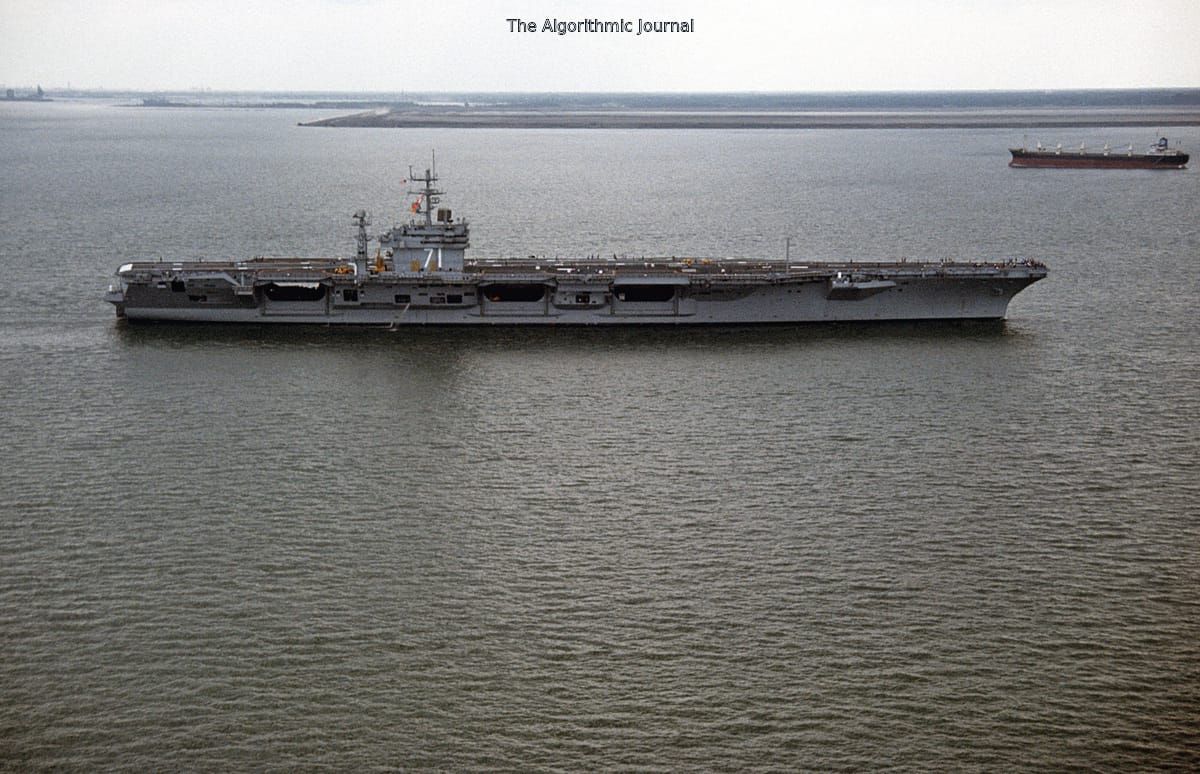
Three U.S. aircraft carriers were in the Middle East on Nov. 16, 2026. The harder question is whether the United States plans to keep three there. The Navy documented the arrival of the USS Theodore Roosevelt, and a U.S. official confirmed to the Associated Press that its arrival brought the regional total to three.
For sailors and their families, a short overlap and a sustained buildup can produce the same headline on arrival day. They have different implications for how long crews spend away and when families can make plans. The next meaningful development may be a departure.
What the Navy confirmed
The Navy’s Nov. 16 release identifies the Theodore Roosevelt as deployed to the U.S. 5th Fleet area of operations. A photograph from that day documents sailors moving supplies during a replenishment with the USS George Washington. In a separate release posted that day, the Navy identified the USS George H.W. Bush as deployed to the same area. Together, those releases name the three ships behind the Associated Press’s count.
The Associated Press reported that the Theodore Roosevelt and its accompanying force left San Diego in September. That gives readers two separate dates: when the ship began its deployment and when the Navy documented its arrival in the region. What changed on Nov. 16 was the publicly confirmed number of carriers in the Middle East.
Why the duration matters
The overlap comes more than eight months into the war with Iran, according to the Associated Press. An additional carrier gives U.S. leaders more military capacity in the region while it is there. The Navy releases describe the mission broadly in terms of maritime security and stability. The public timetable remains open.
For military households, a return date affects ordinary decisions about leave, child care and family travel. A public announcement extending a deployment would give families something more concrete than a carrier count. The records reviewed for this story do not establish that any of the three crews has had its deployment extended.
The count is also a poor substitute for a policy announcement. It establishes what the United States had in the region on a particular day. The same count could reflect ships briefly arriving and leaving on different schedules, or a decision to maintain a larger presence. The Navy records establish the first day of public confirmation. They leave the reason for the overlap and its expected length unresolved.
The next announcement to watch
A Navy announcement that one of the carriers has left the region would establish that the documented overlap has ended. A confirmed deployment extension would tell readers more about what the larger presence means for the affected crew. An announced change in mission would answer a separate question about what the ships are there to do. Each development deserves its own evidence.
The measure to follow is how long the three-carrier presence lasts. The Navy records give us a date from which to track it. A verified departure, extension or mission change would move the story forward.